pop-rock tones on the boss gt-1
Talk to your BOSS GT-1.
You play, GT Pilot flies the pedalboard. Describe the sound in your own words and the AI programs amp, drive and effects right into the GT-1, adjusting until it sounds right.
Free and open source. Mac and Windows.
Demo: a conversation that programs the pedal
Edit bufferT-Scream › Pro Crunch › Delay
youGive me the Mr. Brightside sound
ClaudeDone. T-Scream into a Pro Crunch with an eighth-note delay. Play the riff.
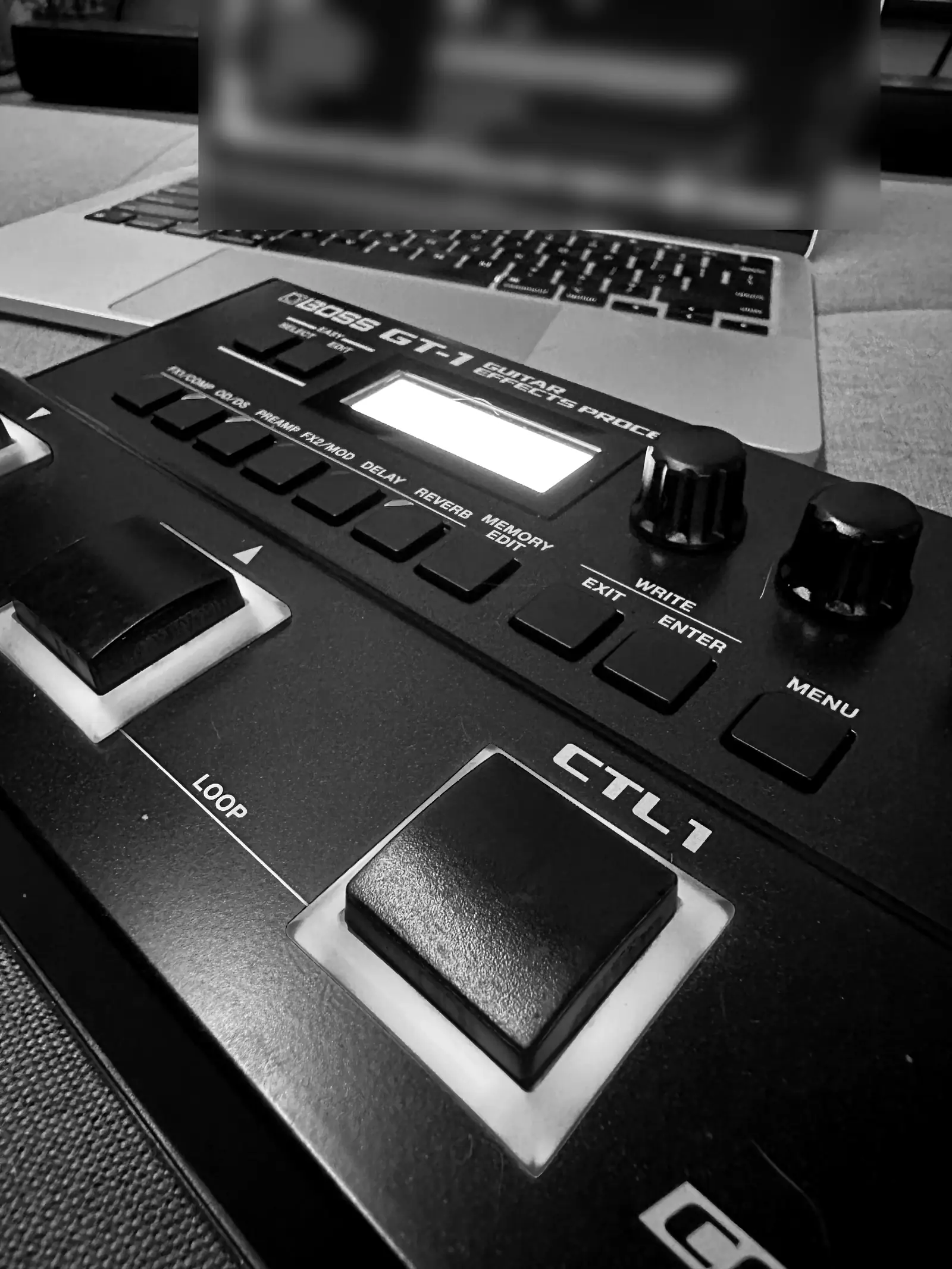
Your GT-1 has more tone than you've ever heard from it.
Dozens of amps and effects sit behind a tiny screen and aging software. That's why so many players never leave the factory presets. With GT Pilot you say what you want to hear and go straight to playing.
How it works
- 01
Connect
Plug the GT-1 into your computer over USB and open Claude.
- 02
Ask
A song, an artist, an amp or just a feeling. “An AC-30 style crunch” is enough.
- 03
Tweak while you play
“Dirtier”, “less treble”, “lose the delay”. When you like it, ask to save it to any slot.
What it's for
- 01
Play the song in your head right now
Name the song, the artist or the amp. The tone lands on the pedal while you tune.
“Give me the Knee Socks solo”
- 02
Get the sound without knowing the knob names
Talk like you'd talk to your teacher. It turns that into a change and tells you what moved.
“Too muddy, and it needs more drive”
- 03
Experiment without losing what worked
A backup before saving, a yes before overwriting and undo at every step.
“Back up everything first”
- 04
Build at home, play without the laptop
Save to a slot and bring just the pedal. Your tones live on the GT-1 and work without a computer.
“Save this to U05, I'm taking it to rehearsal”
- 05
Sound right wherever you're playing
Headphones, a small amp or the rehearsal rig: it adapts the tone and raises the volume in small steps.
“I'm on a little 15-watt amp”
- 06
Practice with the right tone and tempo
A metronome at the song's tempo, through the pedal itself, and one effect at a time so you learn to recognize each.
“Start the metronome at 90”
Other apps hand you settings, GT Pilot sets them.
Most AI tone apps hand you numbers to set knob by knob. GT Pilot writes them to the pedal. You ask, you play, you hear it right away.
Pop-rock tones on the GT-1
Pick a pop-rock song and see which GT-1 (GT1) blocks and types to use, or ask GT Pilot for it ready.
- The Killers
Mr. Brightside
T-Scream › Pro Crunch › Standard
- Coldplay
Yellow
Blues OD › VO Drive › Hall 1
- Oasis
Wonderwall
AC.Guitar Sim › Compressor › Full Range › Room
- Paramore
Misery Business
Turbo OD › R-Fier Vintage
- The Police
Every Breath You Take
JC-120 › Chorus › Standard
- Skank
Garota Nacional
Compressor › Clean Twin
- Os Paralamas do Sucesso
Lanterna dos Afogados
Clean Twin › Chorus › Standard
- Charlie Brown Jr.
Zóio de Lula
T-Scream › Stack Crunch


What you need
- 01
BOSS GT-1 and a USB cable
Plugged into the computer while you build tones. Once they are saved, you play without it.
- 02
Mac or Windows
macOS, or 64-bit Windows 10 and 11 with an Intel or AMD processor.
- 03
Driver and Tone Studio ↗
The GT-1 driver and BOSS Tone Studio installed. Tone Studio stays closed while you use GT Pilot.
- 04
Claude Desktop ↗
GT Pilot works inside the app's conversations.
Other BOSS GT models and a ChatGPT version are on the way.
Common questions
Will it overwrite my patches?
Not without asking. Everything happens on the loaded patch. To write to a slot, GT Pilot shows what's there, asks for confirmation and makes a backup first.
What if I don't like a change?
Just say so. You can undo the last step or go back to what was saved.
Is it paid?
No. It's free and open source, under the MIT license.
Does it work on Windows?
Yes, on Windows 10 and 11, and guitarists are already using it. Open this page on your Windows computer and the download shows up right there, with the setup steps.
Does it work with other pedals?
Only the GT-1 today. Leave your email below and tell us which one you have, that decides the next one.
Why does Tone Studio need to be installed?
GT Pilot reads the GT-1 parameter map from it. That map belongs to Roland and can't be redistributed. Keep the app installed but closed: when open, it reloads the patch and competes for the connection.
Does it send my data anywhere?
No. You talk to Claude like in any other conversation. Once per session the extension reads a public, signed file that says whether a new version is out. That request only says the GT Pilot version, the system (Mac or Windows) and, the first time on a computer, that it is the first time. No identifier at all: it counts how many people start using it, never who. Nothing about you or your pedal is sent, and you can turn it off in the settings.
How do I update?
When a new version is out, Claude tells you in the conversation with the link. Download and open the file again: it replaces the old version and keeps your backups.
Who made it
Allan Kirsten, designer and product leader, guitarist in his spare time. GT Pilot started from wanting to play instead of scrolling through menus.
It's part of his Lab, where he publishes experiments from problem to product. The design case is coming soon. Allan on LinkedIn ↗

Plug in the cable and ask for your first tone.
- 01
Download
One file, gt-pilot.mcpb.
- 02
Install it in Claude
In Claude Desktop, go to Settings > Extensions and drag the file into the window (or use Install extension, under Advanced settings). Review the permissions and confirm; Claude sets up the rest.
- 03
Connect the GT-1
USB cable in, Tone Studio closed. Ask: “check my GT-1”.
- 04
Allow the microphone
The first time Claude listens to the pedal, macOS asks for permission. That's how it hears the GT-1's USB audio.
Free, open source (MIT). macOS, Claude Desktop.
Another BOSS, Windows or ChatGPT?
Leave your email to hear when it's ready. You can also get only the new version notices.